
DPP consulting
From product data to circular lead
It is becoming mandatory for more and more product groups, and it quickly feels like yet another form that must be done. But it is not. A DPP is not an IT project, but sustainability work: your chance to really get a grip on your product and turn compliance into a circular lead.
You already have most of the data you need. Only that data is scattered, across technical sheets, supplier contracts and folders on a shared drive. The real work is bringing it together, structuring it and completing it. In that, we are your guide, from initial inventory to a working passport. And we’ll make sure your organization carries it itself after that.
What is a DPP and does it apply to my organization?
A DPP is the digital record of your product: what it consists of, where it comes from, and how it can be repaired and recycled, retrievable via a QR code. In short, the transparency that the EU is going to demand and that your customers increasingly expect themselves.
It will be phased in, by product category. Some sectors will have their turn as early as 2025, others will follow later. For many products it is therefore mainly a question of when, not if. Want to know what data needs to be included and when it will be your turn? Here we list everything you need to know.
From product data to sustainability gains
Regulations and standards are still evolving, and far from every sector needs to comply in the short term. Therefore, the core of the work now is in the preparation, and we are strong at that. We’ll help you answer three questions: what role do you have in the chain, what data do you need, and how do you set up your organization to keep up, including the governance that goes with it: who approves what data and who keeps track of it? The sustainable choices that the DPP provokes, about material, origin and repairability, will surface automatically as soon as the data are on the table.
How we guide you to a working DPP
We do not make it a monster project, but work step by step from insight to a workable passport:
- Scan and baseline: what data fields apply to your product, what role do you have in the chain, and where are you now.
- Data collection with the right people: collect and structure the data you already have, along with purchasing, production, quality and R&D.
- Gap analysis: what is still missing, and from what source should it come.
- Chain request: a concrete, specific request to your tier 1 suppliers, with the data requirements embedded in your procurement terms and conditions.
- Sustainable choices and roadmap: the improvement opportunities uncovered by the data translated into a phased plan.
Gradually we set up the governance so that it is clear who provides, approves and maintains what data, and the passport stays current. We make sure the DPP is aligned with your existing ESG initiatives, and a training or workshop is part of the process, if desired, for your team to get started on their own.
What you will get your hands on concretely
- A baseline with the data fields that apply to your product.
- A review of present versus missing data.
- A gap report that indicates where to retrieve each missing field.
- A data collection and supply chain plan to close the gaps.
- A roadmap of sustainable improvement opportunities, and optionally a working pilot DPP with QR code.
Where our role ends
We do the strategy, the research, the choices and the guidance of your chain. We don’t tackle the technical set-up and linking of systems ourselves; that’s up to you or a platform partner. We work on the basis of what has already been established, and are honest where we advise in anticipation of regulations yet to come.
Why Empact, and not a platform provider or an accountant
A platform vendor sells software and an accountant audits numbers, but putting together a DPP is mostly sustainability and research work. Our added value lies in three things. We make your organization self-reliant: you understand it yourself, can track it yourself including the associated governance, and connect it to your existing ESG initiatives. We bring years of experience in both product data and sustainability, and it’s that combination that makes the difference between collecting data and understanding data. And we work from the broader sustainability perspective, not from a form.
Previous successful DPP trajectories.
For Heijmans and Schiphol Airport, we deployed Digital Product Passports for building materials, with the aim of moving beyond compliance and making circular opportunities visible. By enabling the reuse of selected building materials, the project made measurable gains in a short time: a saving of over €49,000 in procurement costs and almost 9 tons less CO₂e. And perhaps most importantly, it made concrete what material transparency is worth in business terms.
For a global manufacturer of energy and electronics systems, we tested Digital Product Passports in a pilot, for multiple products, modules and systems. We mapped what data was already available, how we would close the gaps and what part of the data needed to become public, and built the first DPP prototypes. This provided valuable insights for a broader rollout across the organization.
And we look beyond the passport itself. At the Engineering Event SAFETY 2026, we showed how a DPP can bridge sustainability and product compliance: it connects to regulations such as the Machinery Regulation, the PPWR, the Construction Products Regulation, the Medical Devices Regulation and REACH. It is precisely this coherence that makes your approach future-proof.
Read more
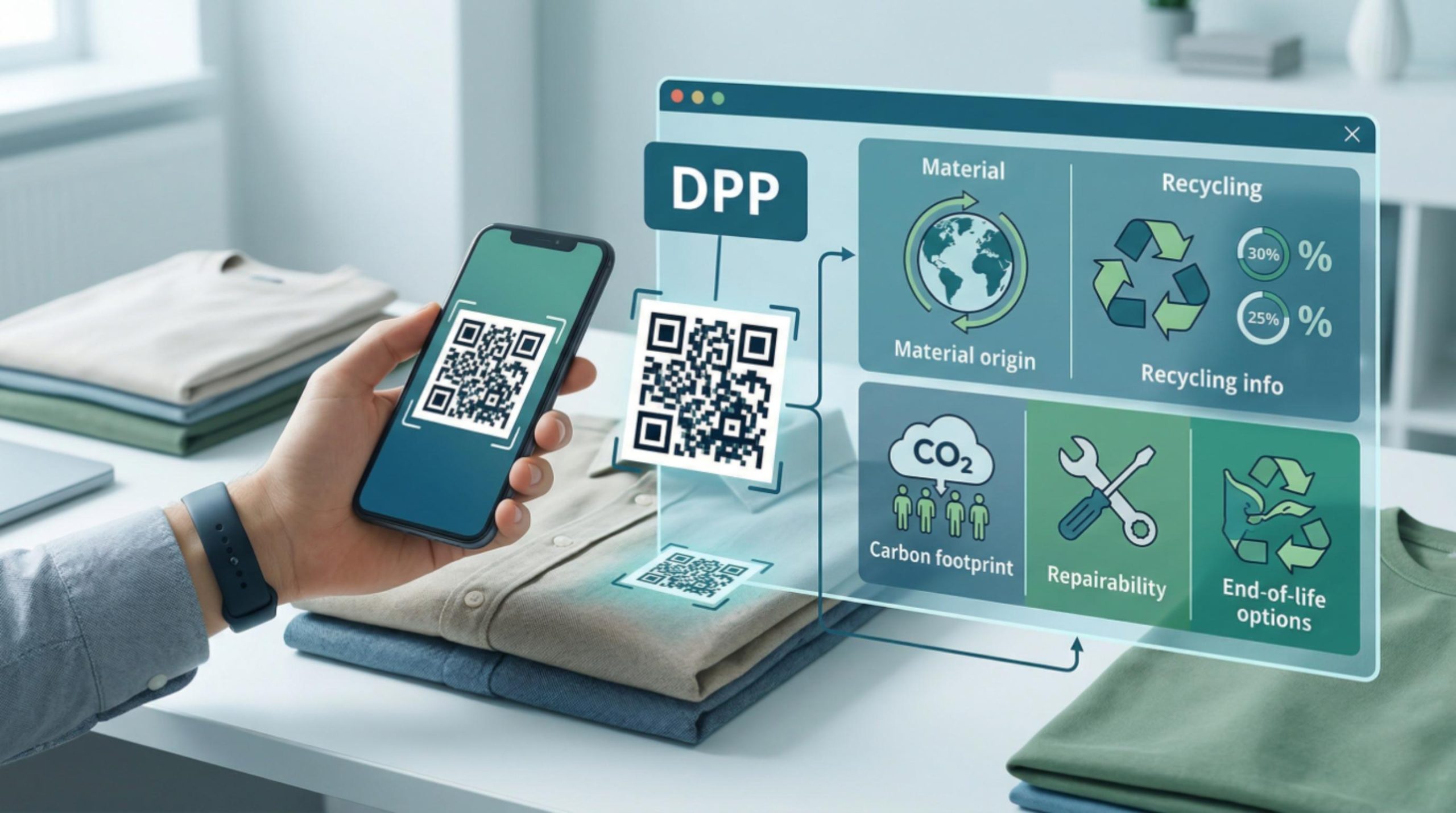
Digital Product Passport (DPP): a digital identity card for your products in the EU
What is in this product? Where do the materials come from? How can it be repaired or recycled? These questions are becoming increasingly relevant, and
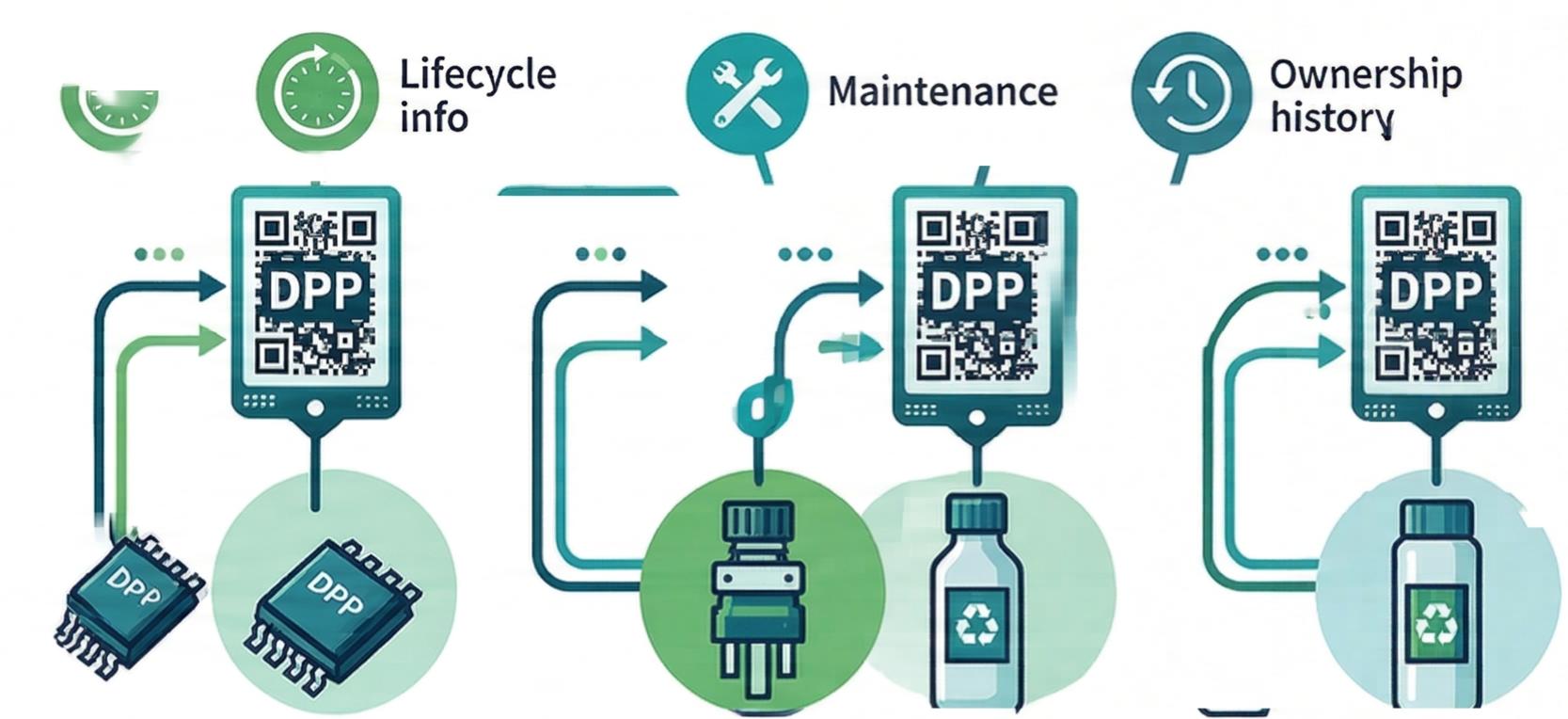
DPP deadlines by product category: when will it become mandatory?
“When should we have a DPP?” It’s a common question from executives and compliance officers. The short answer: it depends on the product category. You
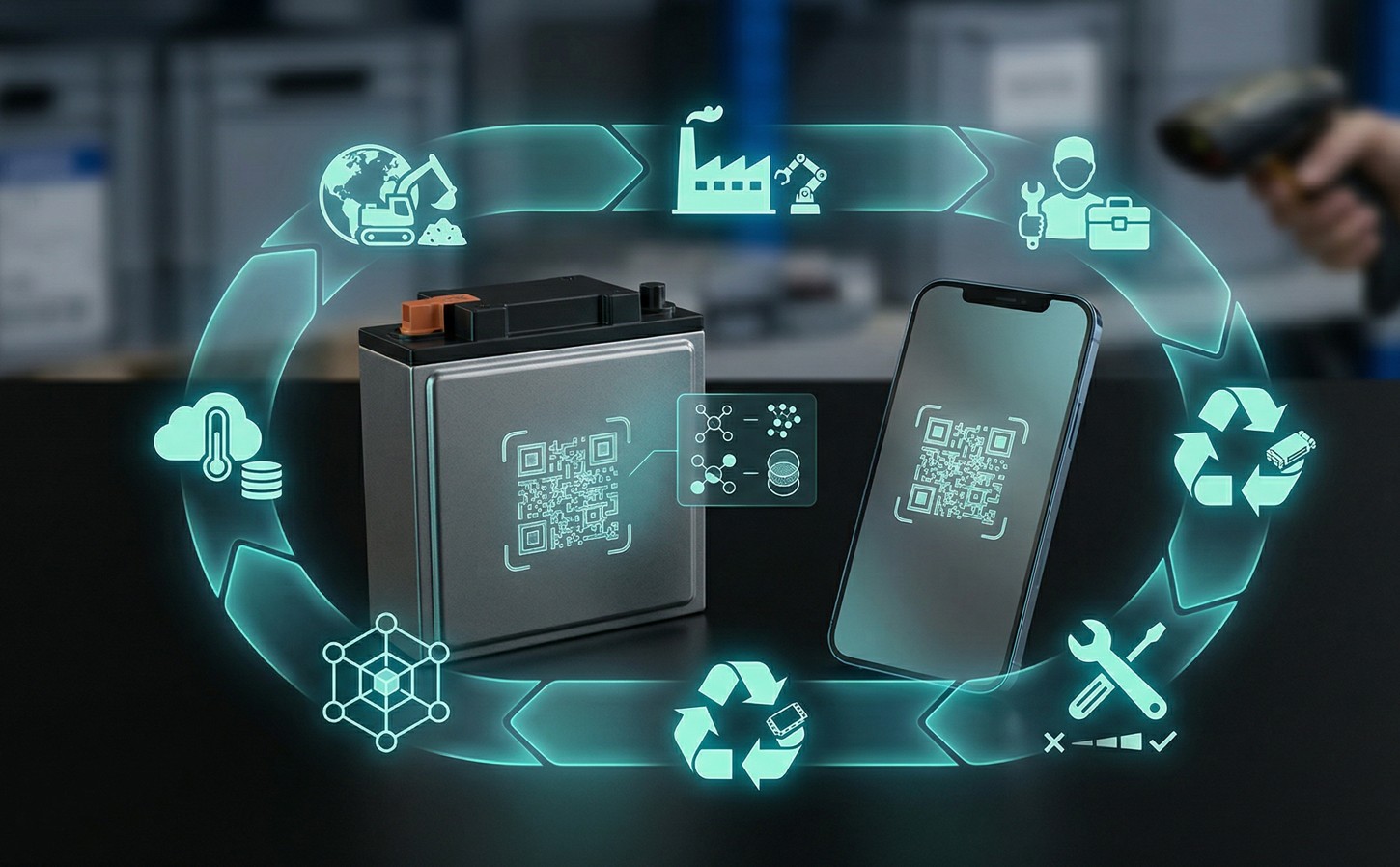
DPP data collection: here’s how to do it
“Where do we start?” It’s the question we hear most often from organizations preparing for the Digital Product Passport. And the answer is more reassuring
Frequently asked questions about our DPP consultancy
What exactly is a Digital Product Passport?
A DPP is a digital identity card for your product: a set of structured data on composition, origin, repairability and recycling, usually accessed via a QR code. The goal is more transparency in the chain and a more circular economy. Read more about this in our knowledge article on the DPP.
Does the DPP already apply to my product?
It depends on your product category. Regulations and standards are still under development and are being phased in by product group; some sectors are leading the way. In the scan and baseline measurement, we determine which requirements apply to your product and how urgent it is.
Is a DPP an IT project?
No. A DPP stands or falls on the quality of your product data and the agreements in your chain: that is sustainability and figuring out. The technology, such as a platform or a QR system, comes later and need not be complicated.
How long does a DPP track take?
We usually complete the preparatory phase, from scan to roadmap, in five to eight weeks. After that, if you want, you can move on to a first working passport with QR code as a pilot.
Getting Started
You don’t need a perfect passport to get started, you just need to know where you stand. The free Empact DPP scan analyzes your existing documentation and instantly shows you how much DPP data you already have.
Do you want to move from insight to implementation after that? We are happy to think along with you. Contact us for a no-obligation discussion.