
Your customers and investors want to know how your supply chain works. Those who gain control of it will retain their customers and make their business stronger.
Anyone who catches, farms, purchases, or processes fish today is familiar with these questions. A customer wants to know about the origin of the fish and the working conditions at your suppliers. A lender asks if you have a clear picture of your supply chain. The question is no longer whether these questions will come up, but whether you have the answers ready.
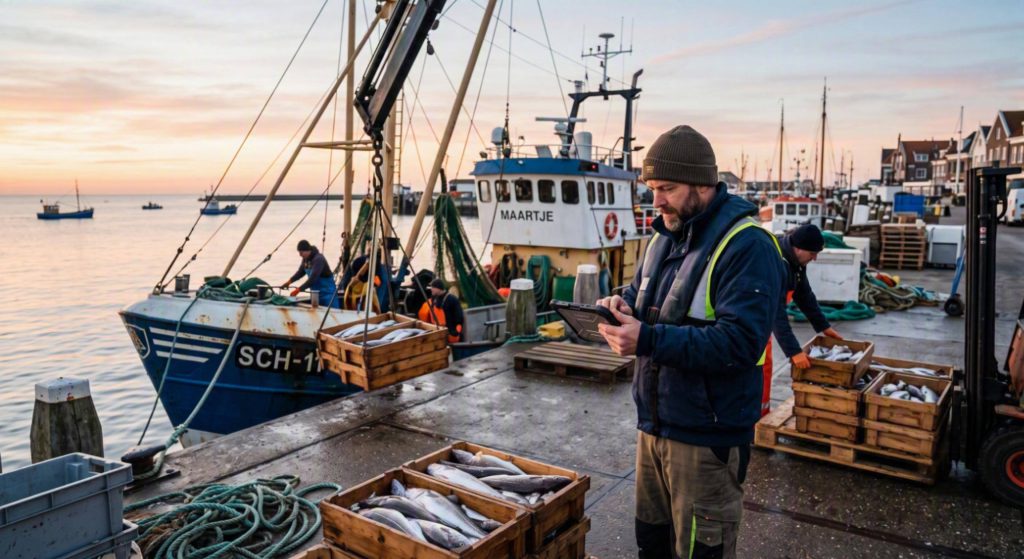
Asking the Right Questions
The answer is due diligence. That sounds like a big deal, but in practice, it just means asking the right questions. Do I know in which area and by which vessel my fish was caught? What are the conditions like at the fish farm? Do I know my suppliers beyond the first link in the chain? Where in my supply chain is the risk greatest? The OECD guidelines break this down into six clear steps, ranging from a risk analysis of your suppliers and fishing areas to concrete measures, tracking progress, and communicating what you’re doing. You start with the areas that matter most, not with a list of dozens of requirements.
Real Risks in the Fish Supply Chain
The fishing industry does, in fact, pose real risks, especially further down the supply chain, at fish farms, and at sea. Crews are sometimes at sea for months at a time, far from oversight, and the International Labor Organization (ILO) estimates that around 128,000 fishermen worldwide are forced to work. Furthermore, catches at sea can be transshipped and mixed, meaning the origin of a batch is far from always clear. For a Dutch fishing company, this doesn’t necessarily mean there’s anything wrong, but your major customers—such as retailers and foodservice companies—are required to report on their own supply chains and pass that requirement on to you.
And this isn’t just a casual question. Those customers regularly make transparency into your supply chain a requirement in their contracts and bids. If you don’t have that in order when they ask for it, an order or shelf space could easily go to a competitor who can demonstrate it. And you can’t build that kind of transparency in just a week.
Getting started doesn’t have to be expensive
Getting started doesn’t have to be expensive. For small and medium-sized enterprises (SMEs), the SME Responsible Business Grant (SVOM) from the Netherlands Enterprise Agency reimburses a portion of the costs of engaging the right expertise. This keeps the barrier to taking the first steps low. At Empact, we guide companies through the process of setting up such a system—in a very practical and goal-oriented way.
If you approach it the right way, it’s more than just paperwork. It gives you control over your business. If a customer asks for supporting documentation, you can provide it. Banks and insurers take it into account. And if a supplier comes under scrutiny, you’ll immediately see what that means for you. Get to know your supply chain and strengthen your position as a seafood company. Read more about our approach to due diligence and risk management, or feel free to contact us.
This column by Derk Jan Berends, an ESG management consultant at Empact Consulting B.V., was previously published in the trade journal FishTrend.