
Anyone who catches, farms, processes, or sells fish is dealing with artificial intelligence more and more often. AI can analyze large amounts of data and recognize patterns in it. That is now happening in the seafood supply chain as well, from catch forecasts to inventory management. I think AI can offer entrepreneurs a lot. At the same time, we need to keep looking critically at what the technology really adds.
Last week I visited SMM in Hamburg, the international maritime trade fair. What struck me there was how far AI has already made its way into the maritime sector. Many exhibitors showed applications for ship design, energy efficiency, routing, and maintenance, among other things. But in fishing, too, AI applications are rising stars.
AI in catching and processing
At sea, AI can combine historical catch data with data on tides, weather conditions, and market information, among other sources. Systems can then predict where certain species are likely to be found. That can save search hours and fuel, and with it reduce emissions that harm the climate and the environment. The thoroughly Dutch company MariControl from Urk, for example, already offers a complete AI-driven fishing trip.
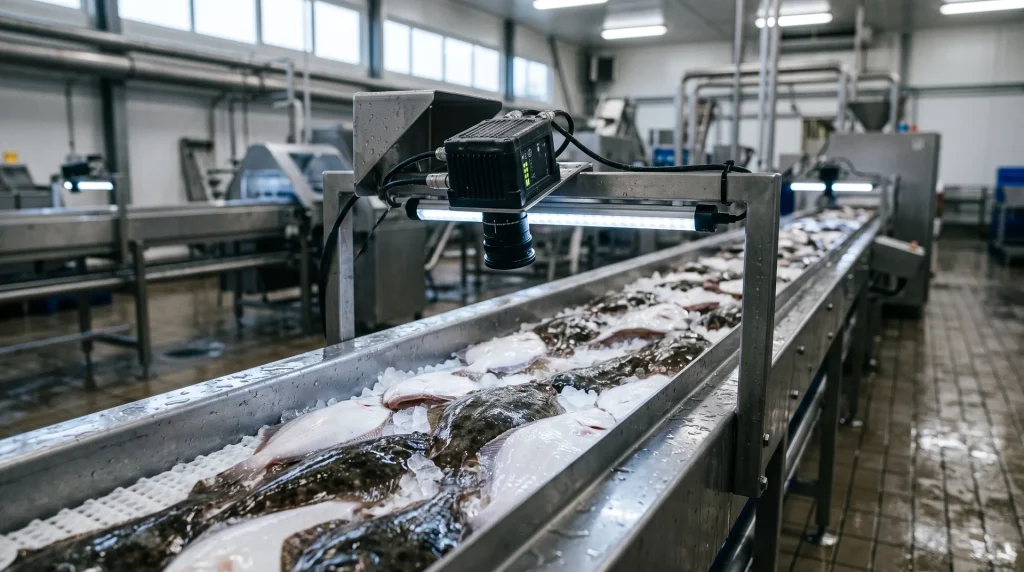
There are opportunities in processing and on board as well. Cameras with image recognition can, for example, identify species, record sizes, and log data on bycatch. That ties in with the revised European Fisheries Control Regulation, which expands digital traceability in the seafood supply chain and requires camera monitoring for certain vessels. At the same time, this meets strong resistance from fishermen at sea. Not only because it infringes on their privacy, but also because it feels like a way to enforce the landing obligation, which they consider pointless. In my view, cameras with AI would be better used for scientific research and for optimizing operations rather than for control.
AI for planning and less waste
AI can add value further down the chain too. How much sole will you sell tomorrow? Which store structurally ends up with leftover stock? Using sales data, AI can recognize patterns and support demand forecasts. For a fresh product like fish, that matters: every kilo that is thrown away has already been caught or farmed, chilled, processed, and transported. According to the FAO, an estimated 30 to 35 percent of production from fisheries and aquaculture worldwide is lost or wasted somewhere along the chain. For a fresh and perishable product like fish, that is a considerable opportunity. With better demand forecasting and inventory planning, AI can help reduce losses further down the chain.
AI and transparency in the chain
For traders, processors, and retailers, I see another interesting application. AI can help process information on origin, certification, and sustainability claims. Now that customers are asking for more and more information about the chain, that can save a lot of work. AI can, for example, extract data from documents or help prepare questionnaires. Think of large Dutch retailers such as Albert Heijn and Jumbo, which ask their suppliers for more and more information for their sustainability reporting (CSRD).
Since September 27, 2026, the provisions of the European EmpCo Directive (2024/825) apply as well. Generic sustainability claims without substantiation are restricted further as a result. A language model can effortlessly write that fish is “sustainably caught,” even when the data to back that up is missing. For responsible business, that is a real risk: transparency only has value if the information demonstrably holds up.
The cost of AI
AI itself also has a footprint. Data centers use electricity, and water for cooling, while the hardware they need requires raw materials. According to the International Energy Agency (IEA), data centers worldwide consumed about 415 TWh of electricity in 2024, roughly 1.5% of global electricity consumption. The IEA expects about 945 TWh in 2030, almost 3% of global consumption. According to the IEA, AI is the main driver of that growth. Electricity use by data centers focused specifically on AI even grew by about 50% in 2025. That is why I believe you should look at what AI actually delivers for each application. A system that demonstrably reduces fuel, energy, or waste has a different sustainability profile than AI that mainly generates extra digital activity.
Craftsmanship is still needed
The possibilities are great, but experience in the seafood supply chain remains important. A buyer knows their suppliers and a fisherman knows their vessel and fishing grounds. AI can analyze data, but the entrepreneur remains responsible for decisions and for the information provided to customers. That certainly applies to sustainability information, on which customers, investors, and consumers increasingly base their choices.
That is why I would mainly advise entrepreneurs to experiment with AI in places where you can measure the result. Look at what it does for fuel consumption, spoilage, administration, or the quality of your supply chain information. AI is a smart assistant, but you are still the entrepreneur. AI only becomes truly interesting for the seafood supply chain when you can use it to show that both your business and your chain become better in a responsible way.
This column by Derk Jan Berends, an ESG management consultant at Empact Consulting B.V., was previously published in the trade journal FishTrend.